Introduction to JWH-210
JWH-210 is a highly potent synthetic cannabinoid that has been extensively studied for its strong affinity toward CB1 and CB2 receptors. As part of the JWH series of cannabinoids developed by Dr. John W. Huffman, JWH-210 exhibits significant psychoactive effects and is structurally related to other well-known synthetic cannabinoids like JWH-018 and JWH-122.
JWH-210 is commonly used in cannabinoid research to investigate its pharmacokinetics, receptor affinity, and potential therapeutic applications. This article provides a comprehensive overview of its chemical structure, binding characteristics, research significance, and comparisons with other synthetic cannabinoids, such as ADB-BUTINACA, 5Cl-ADB-A, and 6-CL-ADBA.
Chemical Structure and Properties
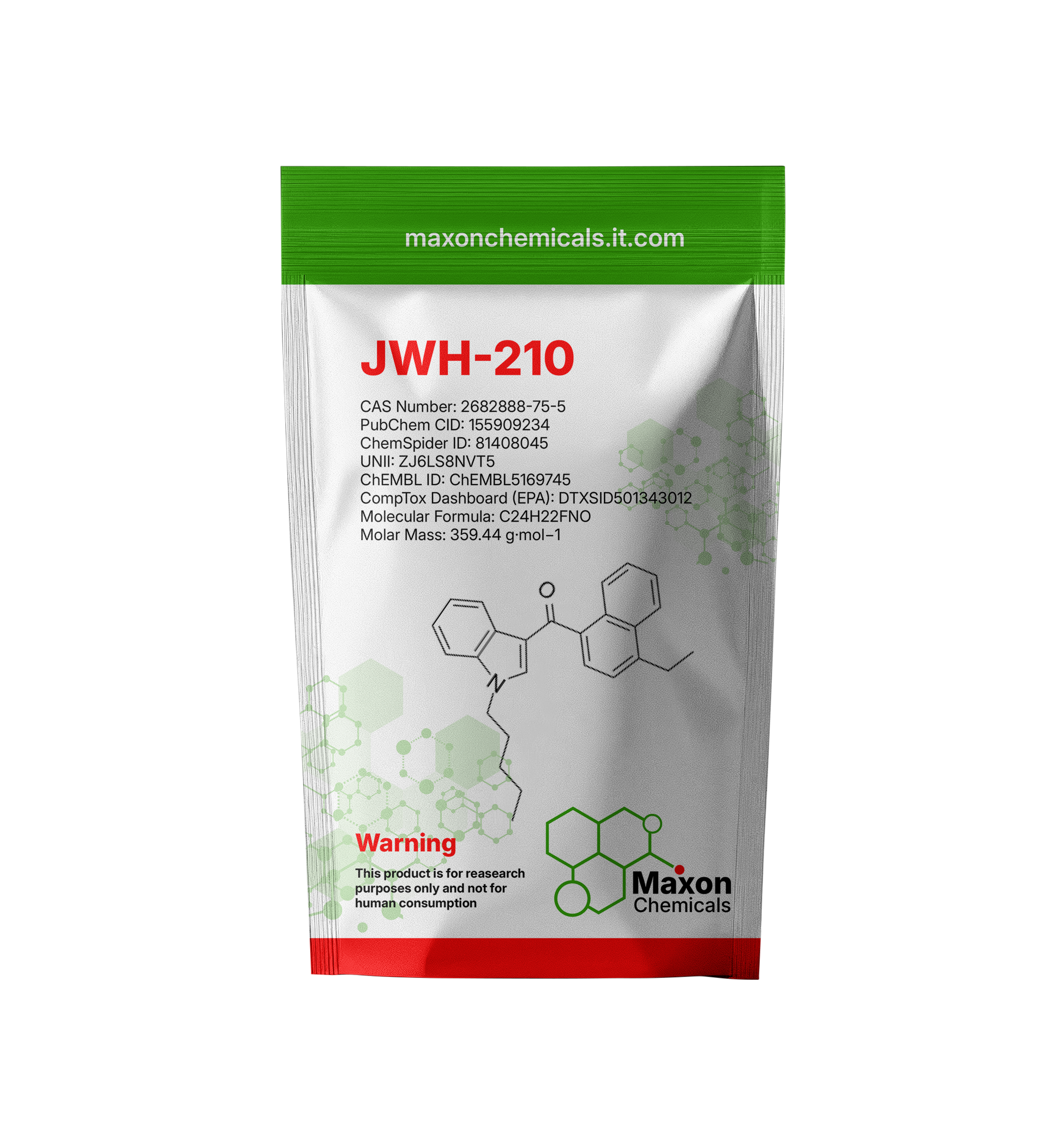
JWH-210 belongs to the naphthoylindole class of synthetic cannabinoids. Its molecular structure enables it to bind with high affinity to cannabinoid receptors, mimicking the effects of natural cannabinoids found in cannabis.
Chemical Properties of JWH-210:
- CAS Number: 824959-81-1
- PubChem CID: 16071202
- ChemSpider ID: 13161931
- UNII: 5LXP812R8G
- ChEMBL ID: ChEMBL421646
- CompTox Dashboard (EPA): DTXSID80145361
- Formula: C24H22NO
- Molar Mass: 340.44 g·mol⁻¹
Pharmacological Effects and Mechanism of Action
JWH-210 is classified as a full agonist of CB1 and CB2 receptors, leading to significant psychoactive effects. By interacting with these receptors, it induces various physiological and behavioral responses, including:
- Euphoria and Relaxation: Like other synthetic cannabinoids, JWH-210 produces euphoric and relaxing effects by stimulating the endocannabinoid system.
- Analgesic Properties: Research suggests that JWH-210 may have potential analgesic effects due to its ability to modulate pain perception through CB1 receptor activation.
- Potential Neuroprotective Effects: Some synthetic cannabinoids have been investigated for their neuroprotective properties, though further research is needed to determine JWH-210’s role in this area.
JWH-210 is structurally similar to ADB-BUTINACA, 5Cl-ADB-A, and 6-CL-ADBA, but its potency and duration of action may vary compared to these newer cannabinoids.
Research and Applications
Due to its strong CB1 receptor affinity, JWH-210 is primarily utilized in scientific studies to explore cannabinoid receptor interactions, structure-activity relationships (SAR), and potential therapeutic applications. Some key research areas include:
- Cannabinoid Receptor Binding Studies: JWH-210 is widely used to examine CB1 and CB2 receptor responses in vitro and in vivo.
- Structure-Activity Relationship (SAR) Studies: Its structure is analyzed to understand how small modifications affect receptor affinity and biological effects.
- Potential Pharmaceutical Applications: Synthetic cannabinoids like JWH-210 could contribute to pain management, neuroprotection, or appetite stimulation research.
Comparison with Other Synthetic Cannabinoids
| Compound |
CB1 Affinity |
CB2 Affinity |
Psychoactive Effects |
Structural Similarity |
| JWH-210 |
High |
High |
Strong |
Related to JWH-018 |
| ADB-BUTINACA |
Very High |
Moderate |
Potent |
Indazole-based |
| 5Cl-ADB-A |
High |
Moderate |
Strong |
Chlorinated indazole |
| 6-CL-ADBA |
Moderate |
High |
Mild to Strong |
Structural analog |
Safety and Legal Considerations
JWH-210, like many synthetic cannabinoids, has raised concerns due to its strong psychoactive effects and potential for adverse reactions, including:
- Increased heart rate and blood pressure
- Anxiety or paranoia in high doses
- Risk of dependence with prolonged use
In many jurisdictions, JWH-210 has been classified as a controlled substance, restricting its availability for non-research purposes. Researchers should ensure compliance with local regulations before working with JWH-210.
Conclusion
JWH-210 is a powerful synthetic cannabinoid with high affinity for CB1 and CB2 receptors, making it valuable for cannabinoid research. It serves as a key compound in the study of receptor interactions and potential therapeutic applications. However, its strong effects necessitate careful handling and regulatory compliance.
For further insights into synthetic cannabinoids, check out related compounds such as ADB-BUTINACA, 5Cl-ADB-A, and 6-CL-ADBA.
 Cart is empty
Reviews
There are no reviews yet.