Introduction to ADB-BUTINACA
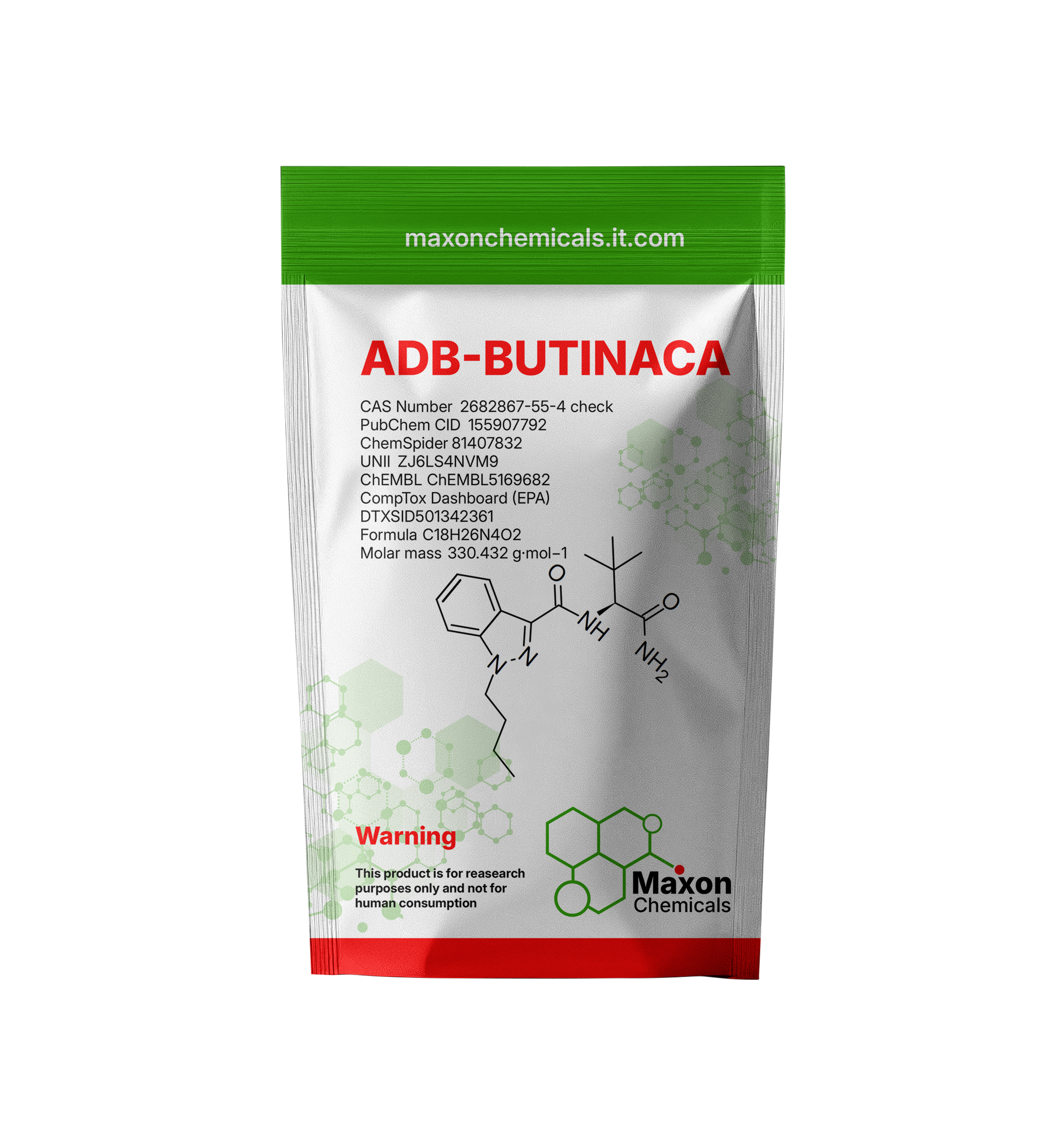
ADB-BUTINACA is a highly potent synthetic cannabinoid that has gained attention in research due to its strong interaction with the endocannabinoid system. As a member of the indazole-based cannabinoid family, it exhibits high binding affinity to CB1 and CB2 receptors, leading to significant psychoactive and physiological effects.
This article provides a detailed overview of ADB-BUTINACA, including its chemical structure, pharmacological effects, potential applications, and safety considerations. Additionally, we compare ADB-BUTINACA to other synthetic cannabinoids like 5Cl, JWH-210, and Pure CBD to highlight its unique properties.
Chemical Structure and Mechanism of Action
How ADB-BUTINACA Works
ADB-BUTINACA acts as a potent agonist at CB1 and CB2 receptors, which are primarily responsible for modulating the endocannabinoid system. By binding to these receptors, it mimics the effects of endogenous cannabinoids, leading to altered mood, perception, and physiological responses.
Due to its high affinity for CB1 receptors, ADB-BUTINACA has been shown to produce stronger psychoactive effects compared to natural cannabinoids like Pure CBD. Researchers study this compound to understand its impact on receptor modulation and potential therapeutic applications.
Research Applications of ADB-BUTINACA
1. Neuroscience and Receptor Studies
ADB-BUTINACA is widely used in neuroscience research to study the effects of synthetic cannabinoids on brain function. Its potent interaction with CB1 receptors makes it a valuable compound for examining neurotransmitter modulation and potential treatments for neuropsychiatric disorders.
2. Pain Management and Analgesic Studies
Researchers have explored ADB-BUTINACA’s potential in pain management due to its ability to activate cannabinoid receptors associated with pain relief. Unlike Pure CBD, which is known for non-psychoactive effects, ADB-BUTINACA has a more direct impact on pain modulation via the CB1 pathway.
3. Pharmacological Profiling of Synthetic Cannabinoids
Comparative studies between ADB-BUTINACA and other synthetic cannabinoids, such as 5Cl and JWH-210, help researchers understand potency variations and receptor selectivity among different analogs.
ADB-BUTINACA vs. Other Synthetic Cannabinoids
ADB-BUTINACA vs. 5Cl
- Potency: ADB-BUTINACA exhibits stronger CB1 receptor activation than 5Cl, leading to more pronounced effects.
- Duration: While both compounds produce long-lasting effects, ADB-BUTINACA has a slightly prolonged action due to its metabolic stability.
ADB-BUTINACA vs. JWH-210
- Receptor Affinity: JWH-210 also targets CB1 receptors but with a different binding efficiency compared to ADB-BUTINACA.
- Psychoactive Effects: ADB-BUTINACA is known for its rapid onset and strong psychoactive properties, whereas JWH-210 has a more gradual effect profile.
Safety and Potential Risks
Dependence and Tolerance
Like many potent synthetic cannabinoids, ADB-BUTINACA has a high risk of tolerance development and dependence. Prolonged exposure may lead to receptor desensitization, requiring higher doses for the same effects.
Toxicity and Side Effects
Excessive activation of CB1 receptors can lead to adverse effects such as:
- Dizziness and disorientation
- Elevated heart rate
- Nausea and vomiting
- Cognitive impairment
Comparatively, Pure CBD has a significantly lower risk of adverse effects since it does not strongly bind to CB1 receptors.
Conclusion
ADB-BUTINACA is a potent synthetic cannabinoid widely studied for its impact on the endocannabinoid system. With strong CB1 and CB2 receptor activation, it serves as a crucial compound in cannabinoid research. However, due to its potency, it requires careful handling and controlled application in laboratory settings.
For further research, related cannabinoids such as 5Cl, JWH-210, and Pure CBD provide alternative profiles for comparative studies.
As synthetic cannabinoid research advances, ADB-BUTINACA remains a key subject for understanding the mechanisms of cannabinoid receptor activation and potential therapeutic applications.
 Cart is empty
Reviews
There are no reviews yet.