Introduction to 5Cl-ADB-A
5Cl-ADB-A is a powerful synthetic cannabinoid that has gained attention in the research community for its high potency and strong interaction with CB1 and CB2 receptors. As a derivative of ADB-BUTINACA, this compound has been modified with a chlorine substitution, altering its receptor binding profile and effects.
This article provides an in-depth look into 5Cl-ADB-A, covering its chemical structure, pharmacology, potential applications, safety considerations, and comparisons to related cannabinoids like ADB-BUTINACA, 6-CL-ADBA, and JWH-210.
Chemical Properties of 5Cl-ADB-A
Understanding the chemical profile of 5Cl-ADB-A is crucial for researchers analyzing its properties:
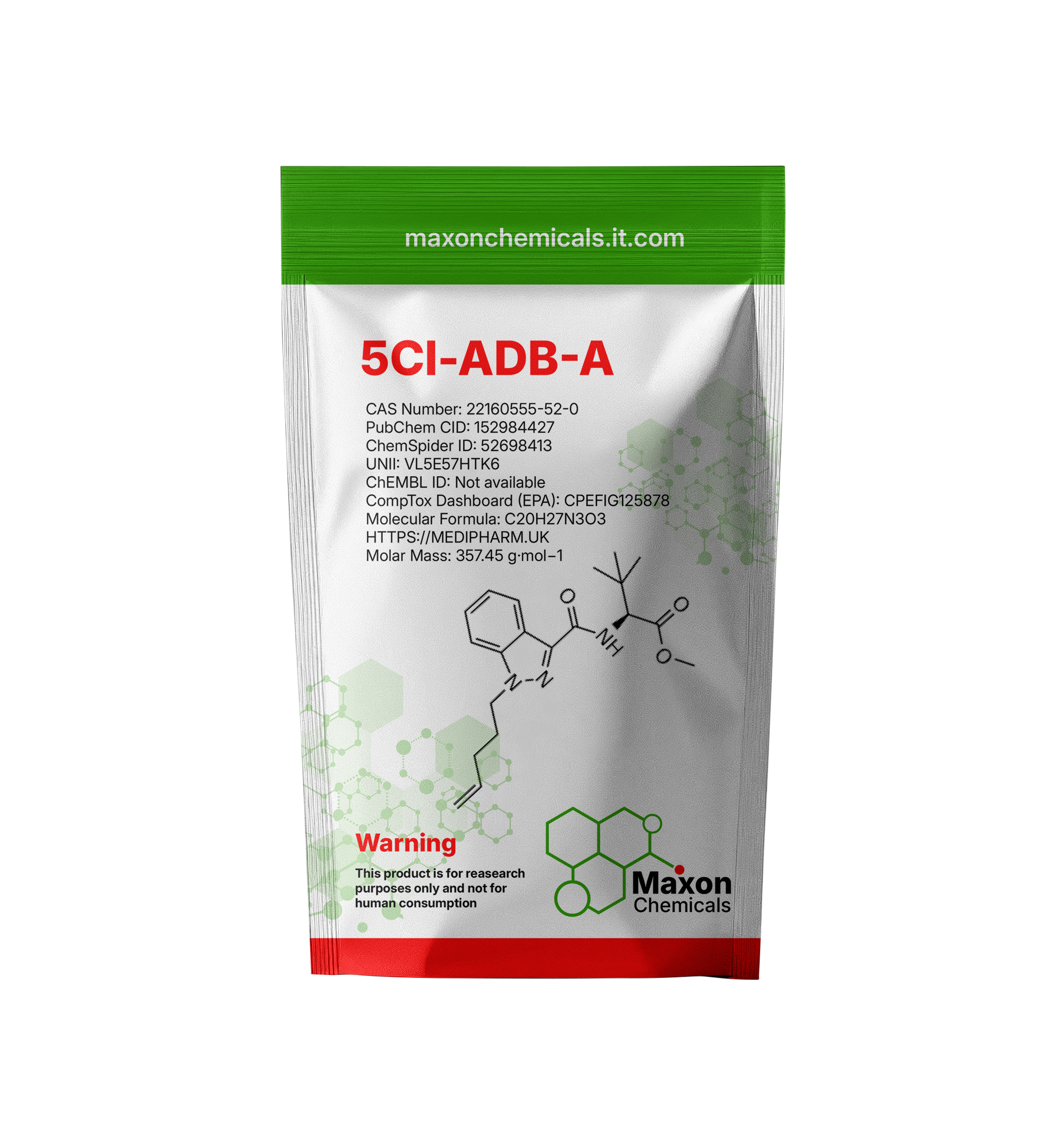
- CAS Number: 2682871-67-5
- PubChem CID: 155908123
- ChemSpider ID: 81407845
- UNII: ZJ6LS5NVM1
- ChEMBL ID: ChEMBL5170629
- CompTox Dashboard (EPA): DTXSID501342378
- Formula: C18H25ClN4O2
- Molar Mass: 350.88 g/mol
This compound’s molecular structure and halogen substitution contribute to its strong CB1 receptor binding, resulting in significant pharmacological activity.
Pharmacology and Mechanism of Action
5Cl-ADB-A functions as a full agonist of cannabinoid receptors, primarily affecting CB1 and CB2. This interaction mimics THC but at a much higher potency, making it essential to handle it with caution in controlled research environments.
Key Pharmacological Effects:
- High CB1 Affinity: Strong interaction leads to intense psychoactive effects.
- CB2 Modulation: Potential immune-modulatory properties.
- Extended Half-Life: Prolonged receptor activation compared to traditional cannabinoids.
- Metabolic Pathways: Liver metabolism similar to other synthetic cannabinoids.
These properties make it a subject of study in neurological research, receptor binding studies, and pharmacological modeling.
Research Applications of 5Cl-ADB-A
Due to its potent receptor activity, 5Cl-ADB-A is investigated in several scientific areas:
1. Cannabinoid Receptor Studies
It serves as a key research tool to explore how synthetic cannabinoids modulate CB1 and CB2 receptor functions, helping scientists understand the neurochemical effects of cannabinoids in the endocannabinoid system.
2. Neuropharmacology Research
Studies focus on its impact on cognition, mood, and neuroprotection, drawing comparisons to ADB-BUTINACA and JWH-210.
3. Toxicology and Safety Profiling
Given its high potency, research investigates its metabolic breakdown, long-term effects, and potential toxicity, ensuring better understanding of synthetic cannabinoids.
Comparing 5Cl-ADB-A to Other Cannabinoids
5Cl-ADB-A is often compared with other synthetic cannabinoids, such as:
| Compound |
Potency |
Duration |
Receptor Affinity |
| 5Cl-ADB-A |
Very High |
Long |
CB1 & CB2 (Full Agonist) |
| ADB-BUTINACA |
High |
Moderate |
CB1 & CB2 (Full Agonist) |
| 6-CL-ADBA |
Moderate |
Short |
CB1 (Partial Agonist) |
| JWH-210 |
High |
Long |
CB1 & CB2 (Strong Agonist) |
This comparison highlights 5Cl-ADB-A’s extreme potency and prolonged duration, making it a significant subject in receptor binding research.
Safety Considerations and Handling Precautions
Due to its high potency, 5Cl-ADB-A requires strict handling procedures in research settings:
- Proper PPE: Always use gloves, masks, and protective gear.
- Ventilated Areas: Prevent accidental inhalation exposure.
- Controlled Dosing: Minimize unintended receptor overstimulation.
- Storage Requirements: Store in cool, dry conditions away from light.
Unlike naturally occurring cannabinoids, synthetic variants like 5Cl-ADB-A can induce unpredictable effects, reinforcing the need for controlled studies.
Conclusion
5Cl-ADB-A stands out as a potent synthetic cannabinoid with high receptor affinity and long-lasting pharmacological effects. It is a valuable tool for cannabinoid research, contributing to a deeper understanding of receptor modulation, neurochemistry, and synthetic cannabinoid interactions.
For further insights into related compounds, explore:
Research on synthetic cannabinoids like 5Cl-ADB-A continues to evolve, paving the way for groundbreaking discoveries in pharmacology and cannabinoid receptor interactions.
 Cart is empty
Reviews
There are no reviews yet.